

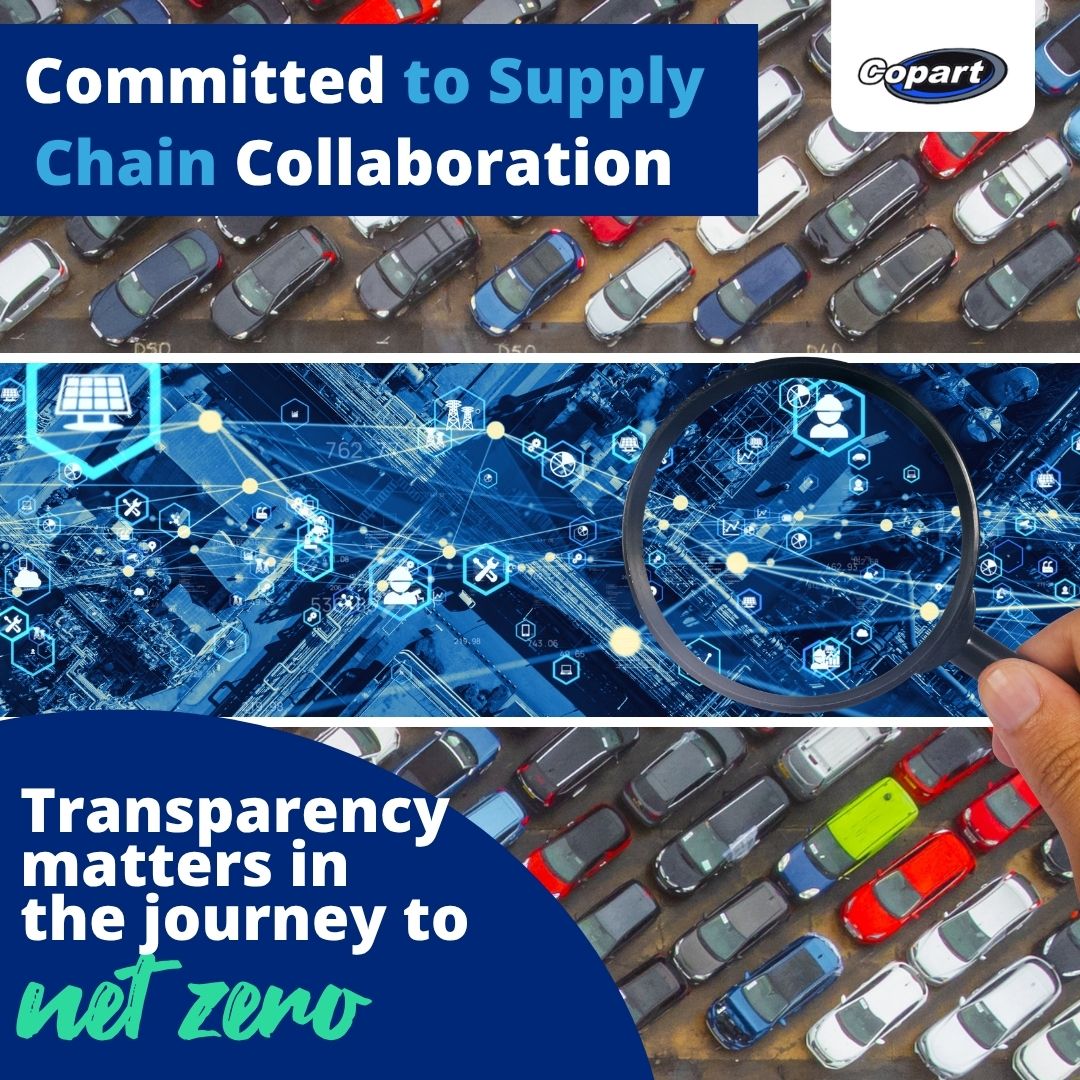
When we talk about reducing emissions, it’s easy to focus on what happens within our own operations at Copart. But other huge opportunities for change sit within our external supply chain.
That’s why we’ve been taking a closer look at how we can work more collaboratively with our suppliers to better understand, measure, and ultimately reduce our Scope 3 emissions.
Starting the conversation
We’ve recently introduced new methodology to strengthen engagement and encourage more productive conversations with our supply chain.
It’s enabled us to gather consistent data on supplier emissions (across Scope 1, 2 and 3), and insights into their existing ESG ambitions (across things like ISO 14001, SBTi, and EcoVadis).
That means that we can now build a clearer picture of where we are today and where we can improve together – and our early findings are encouraging.
Many of our suppliers are already taking positive steps, from investing in renewable energy and electric vehicles, to adopting more circular approaches in their operations.
But, like many industries, there are always more opportunities to be explored – particularly around carbon reporting and long-term transition planning.
Why this matters for our customers
We know that as expectations around ESG performance continue to grow, having clarity on the environmental impact of the entire claims and salvage journey is becoming increasingly important to our insurance and automotive partners.
From transport and fuel usage through to parts reuse and recycling, supply chain emissions play a significant role in the overall carbon footprint of a vehicle claim.
By improving transparency and working with our suppliers to strengthen their sustainability practices, we can provide insurers with greater visibility and reassurance that the processes of both Copart and our supply chain align with their environmental commitments.
Making the biggest difference
Not all suppliers have the same impact, so our approach is focused and practical.
We’re prioritising engagement with those areas that contribute most to emissions—particularly transport and fuel. This will include targeted follow-up to drive measurable reductions, and providing support with data reporting, transition planning, and low-carbon technology adoption.
A shared journey
At Copart, we believe that by working together with our suppliers and partners we can have a much bigger impact on reducing Scope 3 emissions.
Supporting both our Plan-Net-Zero journey and Copart Cares strategy, as well as the collective ESG ambitions of our supply chain, we know that we can make real, meaningful progress.